
- Dubai Real Estate
- Investment Strategy
- 2026 Trends
- Property Market
- Dubai South
2/27/2026
The Evolution of the Dubai Property Market Heading into 2026
As we approach 2026, the Dubai real estate landscape has transitioned from the rapid post-pandemic recovery phase into a period of more structured, sustainable growth. Investors who once looked for quick flips are now being replaced by those seeking long-term value, high rental yields, and the security of the UAE’s robust regulatory environment. Understanding the specific timing for entry is no longer just about following trends; it is about analyzing the completion cycles of major infrastructure projects and the shifting demographics of the city.
For those new to the region, it is essential to first understand the foundational principles of the market. You can explore our foundational resource on The Ultimate Guide to Starting Your Real Estate Investment Journey in Dubai to get a better sense of the legal and administrative framework before diving into the 2026 specifics.
Major Infrastructure Milestones Driving Value
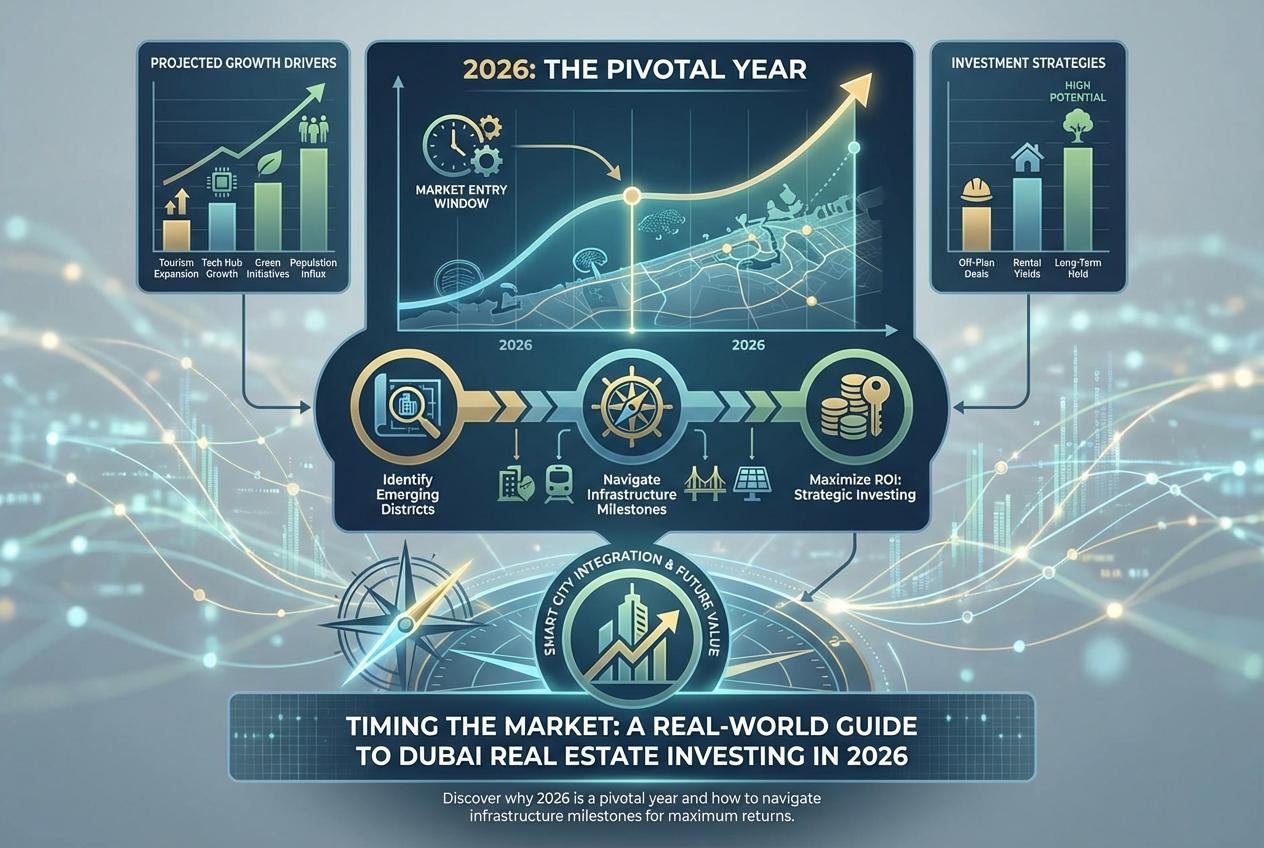
2026 marks a significant year for the 'Dubai 2040 Urban Master Plan.' By this point, several key connectivity projects, including the expansion of the Dubai Metro Blue Line and major road works around Dubai South, will be reaching critical stages. Investing in areas that are about to be connected to the rail network typically sees a price appreciation of 10-15% just before the stations become operational.
Furthermore, the continued expansion of Al Maktoum International Airport is shifting the city's center of gravity southward. Investors should look at residential clusters in Dubai South and Emaar South during the first half of 2026, as these areas transition from emerging construction zones to fully functional communities with high demand for worker and executive housing.
The Shift Towards Mature Communities
While off-plan properties dominated the headlines in previous years, 2026 is seeing a resurgence in the secondary market within established communities like Dubai Marina, Downtown, and Jumeirah Village Circle (JVC). These areas have reached a level of maturity where supply is limited, but demand for high-quality, renovated units remains at an all-time high.
Capitalizing on the Golden Visa 2.0
The UAE’s residency-by-investment schemes have been a primary driver of market stability. By 2026, the long-term impact of the Golden Visa will be fully visible in the luxury segment. High-net-worth individuals are no longer just visiting Dubai; they are making it their primary residence. This shift means that the 'buy-to-live' market is competing directly with the 'buy-to-let' market, creating a floor for property prices that prevents the volatility seen in decades past.
When is the Best Month to Buy in 2026?
Historically, the Dubai market follows a seasonal rhythm. The first quarter (Q1) of 2026 is expected to see a surge in international transactions as winter visitors look to secure second homes. However, the 'sweet spot' for savvy investors often lies in the late summer months (July and August). While transaction volumes are lower due to the heat, developers often release attractive payment plans and incentives during this period to maintain momentum.
Managing Your Portfolio for Rental Yields
In 2026, gross rental yields in Dubai remain some of the highest globally, often ranging between 6% and 9% in mid-market areas. To maximize these returns, investors should focus on smaller units—studios and one-bedroom apartments—in districts with high public transport accessibility. Short-term rentals via platforms like Airbnb continue to be lucrative, particularly in coastal areas, but require a more hands-on management approach.
Avoiding Common Pitfalls in the 2026 Landscape
Despite the optimism, 2026 requires a more discerning eye. The 'fear of missing out' (FOMO) that drove prices in 2022-2023 has cooled. Investors should avoid projects from developers without a proven track record of timely delivery. It is crucial to perform due diligence on escrow account compliance and construction progress photos before committing to an off-plan purchase.
For a deeper dive into the risks and rewards, refer back to The Ultimate Guide to Starting Your Real Estate Investment Journey in Dubai, which outlines the critical questions to ask your broker and developer. Ensuring you have a trusted legal advisor to review contracts is more important in 2026 than ever as contracts become more complex.
Conclusion: A Strategic Entry Point
Investing in Dubai real estate in 2026 is about strategy rather than speculation. With the city’s population projected to continue its upward trajectory and the government’s commitment to economic diversification, the long-term outlook remains bullish. By focusing on infrastructure-led growth, secondary market renovations, and high-yield residential units, investors can build a resilient portfolio that withstands global economic shifts. The key is to start early in the year, monitor interest rate trends closely, and choose locations that align with the city's future transit corridors.